
Blog
How Reusing C&D Waste Can Reduce Your Carbon Footprint

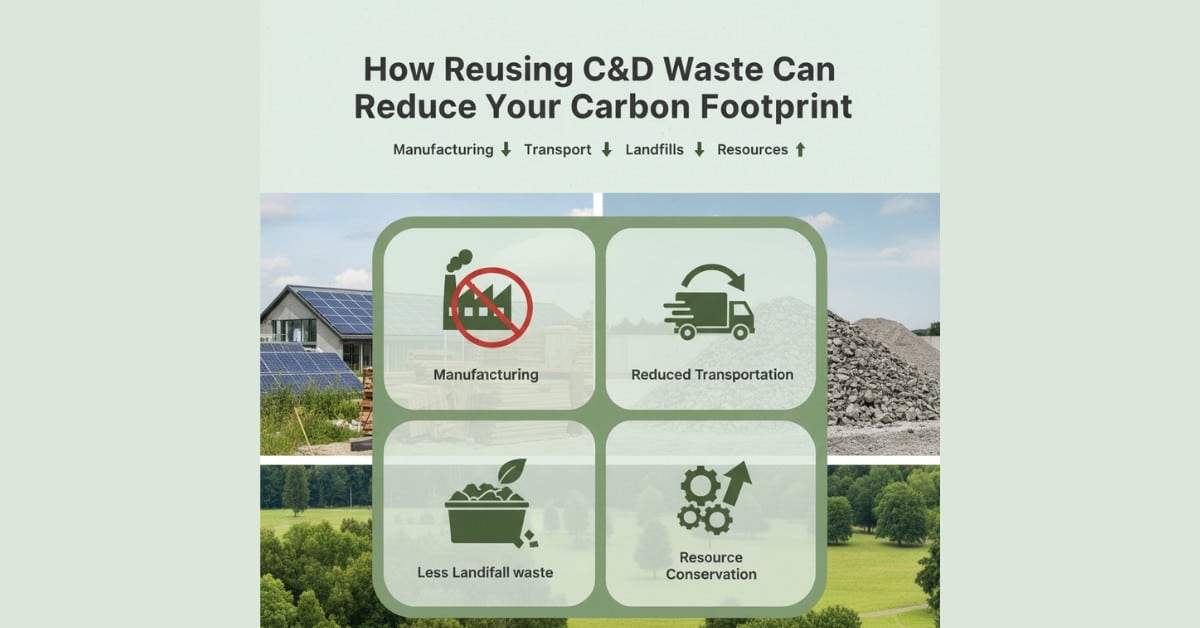
Construction and demolition (C&D) waste is one of the largest sources of waste in the United States. According to the EPA, the industry generates more than 600 million tons of debris each year, which is about twice as much as all municipal solid waste combined. Most of this material ends up in landfills where it releases greenhouse gases and consumes valuable space.
The good news is that reusing and reselling C&D waste can dramatically reduce your carbon footprint, save money, and even create new business opportunities.
🌍 What Is a Carbon Footprint in Construction?
A carbon footprint measures the total greenhouse gas emissions caused directly or indirectly by an activity. In construction, this includes manufacturing new materials such as cement, steel, and lumber, transporting those materials to job sites, and disposing of leftover waste in landfills.
When you reuse materials instead of buying new ones, you lower demand for manufacturing, reduce transportation emissions, and keep waste out of landfills. All of these actions help to shrink your project’s carbon footprint.
♻️ How Reusing C&D Waste Helps the Planet
1. Reduces Landfill Waste
Every ton of wood, metal, or drywall that is reused means less material buried in landfills. Fewer landfills lead to less methane, which is a powerful greenhouse gas, being released into the atmosphere.
2. Cuts Down on Energy Intensive Manufacturing
Producing new cement and steel is one of the largest sources of carbon dioxide emissions worldwide. By reusing bricks, metals, and concrete, builders can help avoid emissions from energy intensive manufacturing.
3. Minimizes Transportation Emissions
Buying salvaged materials locally reduces the distance they need to be transported compared to ordering brand new products from across the country.
4. Extends the Life of Valuable Resources
Timber, stone, and metals are finite resources. Reuse keeps them in circulation longer and reduces the need to harvest or mine new ones.
💰 The Financial Benefits
Reusing C&D waste is not only good for the environment, it is also good for your wallet. Reclaimed materials often cost 30 to 70 percent less than new ones. Contractors can sell leftover materials instead of paying disposal fees. Builders who promote eco friendly practices also tend to win more bids, especially for projects that seek green certification.
🏗️ What Materials Can Be Reused?
Common C&D materials that are easily reusable include:
- Concrete and cement, which can be crushed for aggregate
- Bricks and masonry
- Metals, both ferrous and non ferrous
- Lumber and plywood
- Glass and glazing
- Roofing materials
- Drywall and gypsum, which can be recycled into new boards
✅ How to Start Reducing Your Footprint Today
You can begin shrinking your carbon footprint right away by making a few simple changes. Source reclaimed materials for your next project rather than buying everything new. List leftover materials on online C&D marketplaces such as BuildersTogether to keep them in circulation. Train your team on proper sorting and salvage practices on job sites. Finally, highlight your eco friendly approach in project bids since more clients now prioritize sustainability.
🌱 Final Thoughts
Reusing C&D waste is more than just an environmental choice. It is also smart business. By keeping valuable materials in circulation, you reduce emissions, lower costs, and help lead the industry toward a greener future.
Every brick, beam, and board that is reused is a step closer to a low carbon construction industry.